Overview
dev.fun is a Solana token launch platform. In this product concept, I designed a four-step IPO setup flow covering allocation, token details, project information, and launch review. I also tested how AI could reduce production time from flow definition to interactive prototype while keeping product decisions human-led.
CLIENT
dev.fun
YEAR
2025
ROLE
Product Designer
UX Strategist
KEY outcome
Clear decisions across allocation, costs, and launch review
Fast concept validation through an interactive, code-based prototype
Challnege
IPO setup requires creators to make financial and technical decisions that directly affect token allocation and launch costs. The experience needed to make these decisions easier to understand without removing flexibility or control.
Goal
Design a responsive setup flow that fits dev.fun’s existing product language, then use AI to accelerate exploration, interface generation, and prototyping.
Defining the Product Flow
I reviewed dev.fun’s existing product, launch flow, and visual patterns, then compared similar crypto launchpads and developer tools.
The main challenge was not the number of inputs. It was helping creators understand how each decision affected token allocation, launch costs, and their final position.
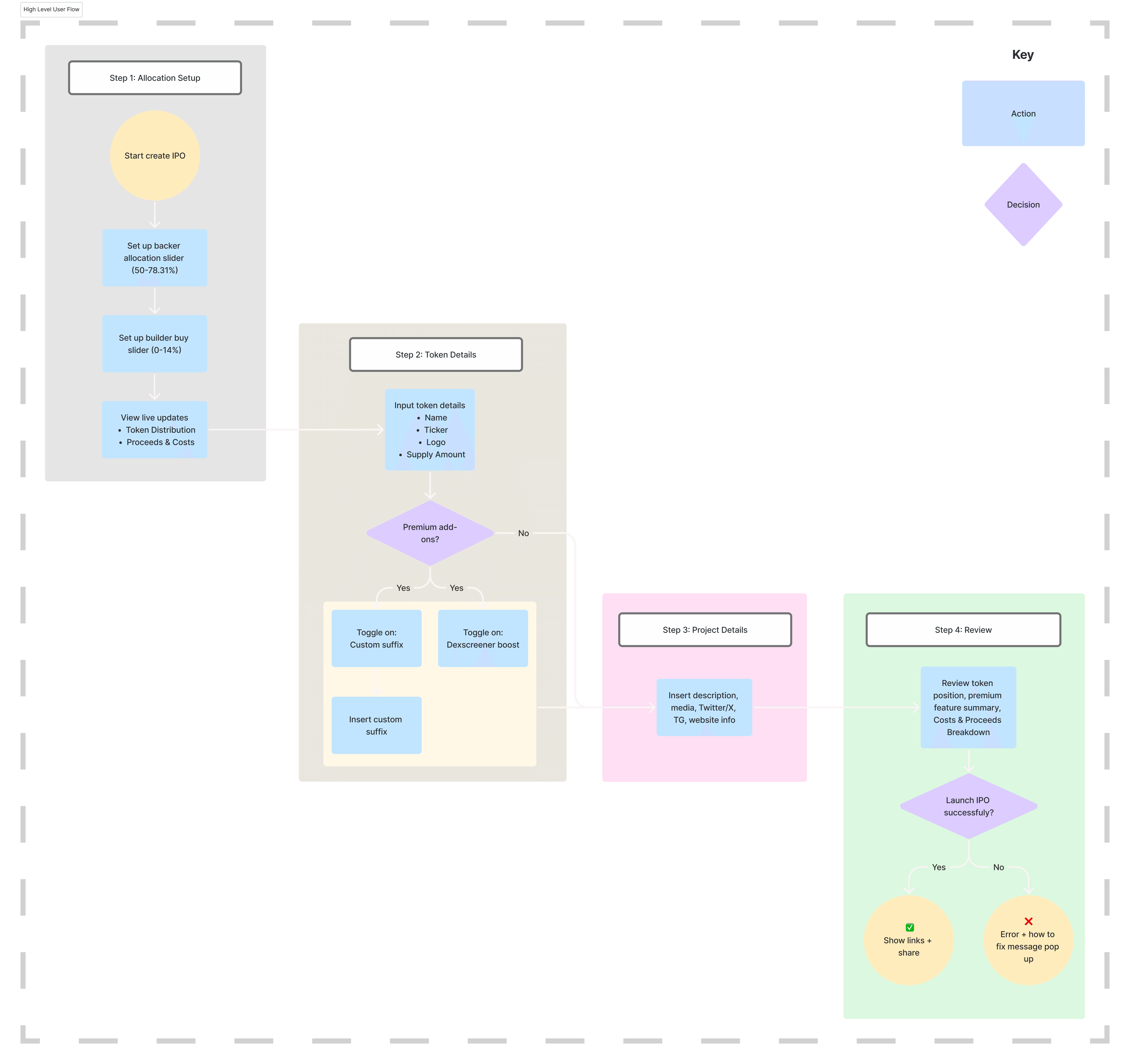
I organized the experience into four steps:
Allocation setup
Token details
Project details
Final review
This separated financial decisions from project information and gave users a clear point to review everything before launch.
Experience Design
Designed the complete IPO setup experience, from allocation configuration to launch review.
Created responsive flows for desktop and mobile while maintaining consistency with the existing product.
Improved transparency through real-time proceeds calculations, allocation breakdowns, and contextual guidance.

Design System
Extending dev.fun’s existing product language.
I built a focused set of components for forms, steppers, sliders, buttons, allocation visuals, feedback states, and responsive layouts. The system preserved dev.fun’s visual identity while keeping the Figma designs and code-based prototype consistent.

AI-Assisted Workflow
ChatGPT and FigJam structured the flow, information architecture, and UX content
v0 generated interface directions and the interactive prototype
Figma was used to refine layouts, components, states, and responsive behavior
I evaluated the product structure, design direction, interaction logic, and risks while using AI to accelerate production.

Early Validation
Verified that key actions consistently attracted the highest visual attention.
Confirmed each step prioritized the most important decision points, from allocation and proceeds to final confirmation.
Used the results to fine-tune layout, emphasis, and information hierarchy before implementation.

Heat map
Outcome
A responsive prototype ready for validation.
The final concept guides users through allocation, token setup, project details, and review while showing the impact of their choices. It demonstrates how AI can accelerate prototyping without replacing design judgment.
Next Steps:
Test understanding of allocation, costs, and proceeds
Measure completion and abandonment
Track interactions with pricing and optional features
Use feedback to prioritize improvements

Other projects


